


Plantation Shutters Westfield NJ | Colonial Home Experts
When January temperatures in Westfield NJ plunge below 20°F and your PSE&G bill climbs past $300, those beautiful multi-pane colonial windows become your home’s biggest energy liability. Homeowners in Stoneleigh Park and Wychwood know this frustration intimately—historic charm comes with drafty single-pane windows that hemorrhage heat straight into the frozen air.
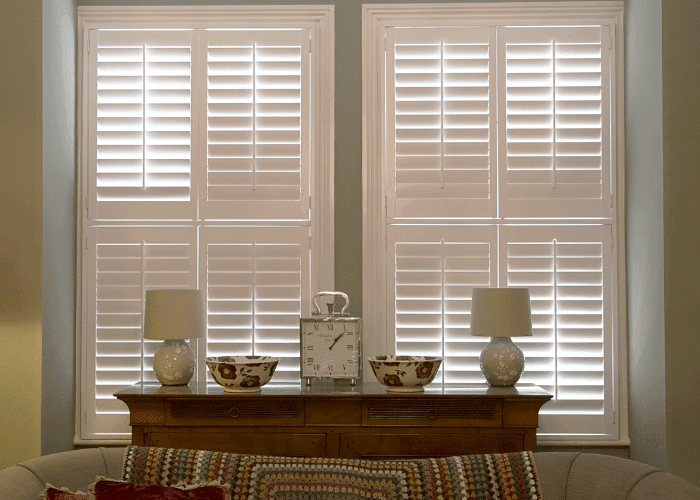
Plantation shutters solve this specific problem for Colonial Revival and Victorian-era homes throughout Westfield, delivering authentic period-appropriate aesthetics while creating a thermal barrier that can reduce window heat loss by up to 45% (Source: U.S. Department of Energy, 2023). This guide shows you exactly how to select, size, and install plantation shutters that honor your home’s architectural heritage while slashing your winter energy costs.
Why Westfield’s Colonial Architecture Demands Authentic Shutters
The Multi-Pane Window Challenge
Walk through the tree-lined streets near Mindowaskin Park and you’ll notice a consistent architectural feature: six-over-six and eight-over-eight double-hung windows framed by traditional casings. These windows define Westfield’s Colonial Revival character, but they also present a unique challenge. Standard blinds and drapes look out of place against these proportions, creating visual discord that diminishes your home’s curb appeal and interior cohesion.
Interior shutters with 2.5-inch or 3.5-inch louvers mirror the horizontal lines of multi-pane grids, creating visual harmony that other window treatments simply cannot achieve. The National Association of Home Builders reports that properly matched window treatments increase perceived home value by 3-7% in established historic neighborhoods (Source: NAHB Remodeling Market Index, 2023).
Matching Your Home’s Specific Era
Not all colonial homes in Westfield NJ share identical details. Your shutter selection should reflect your specific era:
- Georgian Colonial (pre-1780 style): Narrower 2.5″ louvers, raised panel sections below, painted finishes in historically accurate colors
- Federal Colonial (1780-1820 style): Full-length louvers, elliptical fanlights accommodated with custom arched tops
- Colonial Revival (1880-1955): Flexible options including 3.5″ louvers, divider rails at sash lines, both painted and natural wood finishes
- Victorian-era homes: Taller shutter panels with 4.5″ louvers complement floor-to-ceiling windows common in Wychwood estates
Insulation Performance That Fights Northeast Winters
The Science Behind Thermal Protection
Your windows account for 25-30% of residential heating energy loss according to ENERGY STAR guidelines (Source: ENERGY STAR Residential Windows Guide, 2024). In Westfield’s climate zone—where the average January low hits 22°F and freeze-thaw cycles stress window seals constantly—maximizing insulation at every opening directly impacts your comfort and your PSE&G statements.
Plantation shutters create an air pocket between the closed louvers and window glass. This trapped air acts as insulation, reducing convective heat transfer. Basswood shutters with proper weatherstripping achieve R-values between 3.0 and 4.5, compared to R-1.0 for single-pane glass alone (Source: American Society of Heating, Refrigerating and Air-Conditioning Engineers, ASHRAE Fundamentals Handbook, 2021).
Material Comparison for Westfield Homes
| Material | R-Value | Humidity Resistance | Best For | Lifespan |
|---|---|---|---|---|
| Basswood | 3.5-4.5 | Moderate | Living rooms, bedrooms | 25+ years |
| Poplar | 3.0-3.8 | Moderate | Budget-conscious projects | 20+ years |
| Composite/PVC | 2.8-3.2 | Excellent | Bathrooms, kitchens | 30+ years |
| Aluminum Core | 2.0-2.5 | Excellent | High-moisture areas | 35+ years |
For most colonial home shutters in living areas throughout Stoneleigh Park, basswood delivers the optimal combination of authentic wood grain, paintability, and thermal performance. Reserve composite options for bathrooms where humidity fluctuates dramatically between seasons.
Professional Installation for Westfield’s Historic Windows
Measuring Considerations Unique to Older Homes
Here’s what generic shutter installers miss about Westfield’s housing stock: colonial-era window frames rarely sit perfectly square. Settlement, humidity cycles across 80+ years, and original construction variations mean your windows likely deviate from true by 1/8″ to 3/8″ across their span. Standard factory shutters won’t accommodate these irregularities.
Proper wood shutters installation in historic homes requires:
- Six-point measurement at each window (top, middle, bottom width; left, center, right height)
- Assessment of window trim depth to determine inside vs. outside mount
- Evaluation of existing hardware, sash locks, and tilt mechanisms
- Custom fabrication allowing 1/16″ tolerance adjustments
- Color matching to existing trim using Benjamin Moore or Sherwin-Williams historic palettes
Inside Mount vs. Outside Mount Decision
Your window trim depth determines the best mounting approach. Colonial Revival homes near Westfield Memorial Library typically feature deeper casings (2.5″-4″) that accommodate inside mounts beautifully. This installation style showcases the original wood trim framing your new shutters—the look most historically authentic for the neighborhood.
Outside mounts work better when trim depth falls below 2.5″ or when you’re covering damaged window casings. Both approaches provide equivalent insulation performance, so let your home’s specific architecture guide the decision.
Investment Value and Energy Savings Calculation
What Westfield Homeowners Actually Pay
Quality interior shutters Westfield installations range from $35-$55 per square foot for basswood and $25-$40 for composite materials, including professional measurement and installation. A typical colonial home with 12-15 windows represents a $4,500-$8,500 investment depending on window sizes and material selections.
“We converted every window in our 1920s colonial on Kimball Avenue to plantation shutters three winters ago. Our January PSE&G bill dropped from $387 to $298—a 23% reduction we see every single heating season. The shutters paid for themselves in year five.” — Margaret T., Stoneleigh Park
According to the Appraisal Institute, plantation shutters return 75-85% of their cost at resale in established Northeast markets with traditional housing stock (Source: Appraisal Institute, Residential Property Analysis, 2022). Combined with annual energy savings averaging $180-$350 in climate zone 5 where Westfield sits, your net cost drops significantly over a typical ownership period.
Comparing Long-Term Value
Other window treatments require replacement every 7-12 years. Quality plantation shutters last 25-35 years with minimal maintenance—occasional dusting and touch-up painting. When you factor replacement costs for blinds or drapes over three decades, shutters emerge as the most economical choice despite higher upfront investment.
Ready to see how plantation shutters transform your colonial’s windows? Schedule your free in-home consultation and receive exact measurements and pricing for your specific Westfield home.
Selection Guide: Louver Sizes, Colors, and Hardware
Louver Width Recommendations by Room
Louver size affects both light control and visual proportion. For Westfield NJ colonial homes, follow these guidelines:
- 2.5″ louvers: Most historically accurate; ideal for smaller windows, upstairs bedrooms, offices
- 3.5″ louvers: Versatile middle option; maximizes view while maintaining traditional proportions; suits most living rooms and dining rooms
- 4.5″ louvers: Modern interpretation; best for floor-to-ceiling Victorian windows in Wychwood; opens sight lines significantly
Color Selection for Colonial Authenticity
The Colonial Williamsburg Foundation maintains verified historic color palettes appropriate for period homes. Popular choices among Westfield homeowners include:
- Palace White: Crisp but not stark; complements most trim colors
- Bone White: Warmer undertone; pairs with cream-colored walls
- Custom stains: Match existing oak, cherry, or mahogany millwork
Your shutter hardware (hinges, tilt rods, locks) should complement existing door and cabinet hardware. Brushed nickel, oil-rubbed bronze, and polished brass remain the most popular finishes in traditional Westfield neighborhoods.
Maintenance and Care Through New Jersey Seasons
Seasonal Inspection Checklist
Westfield’s dramatic seasonal swings—from humid 85°F summers to sub-freezing winters—stress window treatments continuously. Inspect your plantation shutters quarterly:
- Spring: Check for winter humidity damage; tighten any loosened hinges
- Summer: Clean louvers with damp microfiber cloth; inspect finish for sun fading
- Fall: Ensure panels close tightly before heating season; adjust tension screws if needed
- Winter: Verify weatherstripping seals against frames; operate tilt mechanisms to prevent sticking
Proper care extends shutter lifespan beyond 30 years, protecting your investment through decades of Northeast weather extremes.
Your Westfield colonial deserves window treatments that honor its heritage while performing in today’s energy-conscious reality. Our installation team specializes exclusively in historic New Jersey homes—we understand the measurement challenges, the aesthetic requirements, and the performance expectations that distinguish serious colonial restoration from generic upgrades.
Schedule your free in-home plantation shutter consultation in Westfield today—call us at [phone] or book online. We’ll provide exact measurements, material recommendations specific to your home’s era, and transparent pricing within 48 hours.
Frequently Asked Questions
How long does professional plantation shutter installation take in a typical Westfield colonial home?
Most 12-15 window colonial homes in Westfield require 1-2 days for complete installation after a 3-4 week custom fabrication period. The initial measurement appointment takes approximately 90 minutes, during which technicians document every window’s exact dimensions and discuss material and color selections with you.
Can plantation shutters be installed on arched or specialty-shaped windows common in Victorian Westfield homes?
Yes, custom plantation shutters accommodate arched transoms, circle-tops, and Palladian windows frequently found in Wychwood Victorian estates. These specialty shapes require sunburst louver configurations or fixed arched panels above operable rectangular sections, adding approximately 40-60% to per-window costs due to handcrafted construction requirements.
Do plantation shutters qualify for any energy efficiency rebates through PSE&G or New Jersey programs?
While plantation shutters themselves don’t currently qualify for PSE&G rebates or New Jersey Clean Energy Program incentives, they contribute to overall home energy performance that may qualify your property for other upgrades. New Jersey’s Home Performance with ENERGY STAR program offers comprehensive assessments where documented window insulation improvements strengthen your case for weatherization rebates on complementary projects.
What warranty coverage should I expect for plantation shutters installed in Westfield?
Quality manufacturers offer 20-25 year warranties covering defects in materials and workmanship, while professional installers typically provide 2-5 year installation guarantees. Ensure your warranty explicitly covers finish peeling, louver warping, and hardware failure—common failure points in Northeast humidity cycling conditions—and verify whether coverage transfers to subsequent homeowners if you sell your Westfield property.