


Custom Roman Shades Westfield NJ | Tudor Home Specialists
How to Choose Custom Roman Shades for Your Westfield Tudor Home
If you own a Tudor Revival home in Westfield NJ and you’re considering custom roman shades, you’re facing a decision that goes beyond simple aesthetics. The distinctive arched windows and leaded glass characteristic of Wychwood and Brightwood homes require window treatments that honor architectural heritage while solving real performance problems—particularly the harsh winter drafts that slip through older window assemblies. The right roman shade will insulate, fit precisely, and complement your home’s character. The wrong choice leaves you with gaps, poor light control, and a dated look.
Made in the Shade Golden Triangle NJ specializes in helping Westfield homeowners navigate these choices. This guide walks you through the key decisions—fabric type, mounting style, operating mechanism, and insulation performance—so you can make a confident investment in your Tudor home.
Flat-Fold vs. Hobbled vs. Relaxed: Which Roman Shade Style Fits Tudor Architecture?
Roman shades come in several distinct fold styles, and each creates a different visual effect against your Tudor windows. Understanding the trade-offs helps you match the shade to your home’s personality.
Flat-Fold Roman Shades
Flat-fold shades stack in crisp, horizontal pleats when raised. They offer the cleanest, most tailored appearance and work well in rooms where you want understated elegance. For Tudor homes near Mindowaskin Park with strong period detailing, flat-fold shades complement rather than compete with ornate window trim and leaded glass patterns. The streamlined profile also means less bulk at the top of the window when the shade is fully raised—important if your Westfield Tudor has decorative crown molding you want to showcase.
Hobbled (Teardrop) Roman Shades
Hobbled shades maintain soft, cascading folds even when fully lowered. The continuous drape creates a more luxurious, dimensional look that reads as traditional. If your Brightwood Tudor has formal living spaces with heavy millwork and rich wood tones, hobbled roman shades add visual warmth without feeling stark. The trade-off: hobbled styles use more fabric, which increases cost but also improves insulation—a genuine benefit when January winds test your windows.
Relaxed Roman Shades
Relaxed shades curve gently at the bottom edge, creating an arched silhouette when lowered. This style can echo the curved profiles of Tudor arched windows beautifully. However, they offer slightly less light-blocking precision than flat or hobbled styles because the curved hem doesn’t sit flush against the window frame.
Comparison Table: Roman Shade Styles for Tudor Homes
| Style | Visual Effect | Insulation | Best For |
|---|---|---|---|
| Flat-Fold | Clean, tailored | Moderate | Showcasing ornate trim |
| Hobbled | Luxurious, traditional | High (more fabric layers) | Formal living areas |
| Relaxed | Soft, curved | Moderate | Complementing arched windows |
Fabric Selection: Balancing Aesthetics, Insulation, and Light Control
Your fabric choice directly affects how well your custom roman shades perform against Westfield’s winter drafts. PSE&G customers know that heating costs climb when cold air infiltrates through window gaps—and the right shade fabric creates a meaningful thermal barrier.
Lined vs. Unlined Fabrics
Unlined roman shades filter light beautifully and work well in spaces where privacy isn’t critical during daylight hours. However, for Tudor bedrooms or street-facing windows in neighborhoods like Wychwood, you’ll likely want lined shades. A standard lining adds opacity and modest insulation. Blackout lining blocks nearly all light and provides better thermal performance. Thermal or interlining—a flannel-like layer between the face fabric and lining—offers the strongest draft protection and is worth considering for older Tudor windows that lack modern weatherstripping.
Natural vs. Synthetic Fibers
Linen, cotton, and silk create refined textures that suit Tudor interiors. Natural fibers breathe well and age gracefully. Synthetic blends (polyester, acrylic) offer superior stain resistance and UV stability—relevant if your shades will receive direct afternoon sun near Westfield Memorial Library or other west-facing exposures. Many high-end fabric collections blend natural and synthetic fibers to capture the best of both.
Pattern and Color Considerations
Tudor Revival homes often feature warm wood tones, leaded glass, and plaster walls. Solid fabrics in deep jewel tones (burgundy, forest green, navy) reinforce the period aesthetic. Subtle geometric patterns can complement leaded glass without clashing. Avoid overly busy prints that compete with your windows’ distinctive character.
A well-chosen roman shade should make you notice how beautiful your Tudor windows are—not distract from them.
Inside Mount vs. Outside Mount: Solving the Arched Window Challenge
Mounting style matters more in Tudor homes than in typical construction because of non-standard window shapes and limited frame depth.
Inside Mount Installation
Inside mounting places the shade within the window frame, creating a clean built-in look. This approach showcases decorative trim and works beautifully when your Tudor windows have deep enough frames (typically needing at least 2-3 inches of depth). However, older Tudor windows often have shallow frames or irregular dimensions that make inside mounting impractical.
Outside Mount Installation
Outside mounting attaches the shade above and beyond the window frame. This approach works with nearly any window shape, covers imperfect frames, and improves insulation by creating a larger coverage area. For Westfield Tudor homes with challenging arched or irregular windows, outside mounting often delivers better results. The trade-off is that you’ll partially cover decorative trim.
Handling Arched Tudor Windows
True arched windows require specialized solutions. Options include:
- Custom-shaped roman shades that follow the arch contour (most expensive, most tailored)
- Rectangular shades mounted below the arch, leaving the curved portion exposed (preserves the architectural feature)
- Fixed fabric treatments for the arch paired with operable roman shades below
Made in the Shade Golden Triangle NJ brings professional measurement tools specifically designed for non-standard window geometries—critical for getting these installations right the first time.
Cordless, Motorized, or Standard: Choosing Your Operating Mechanism
How you raise and lower your roman shades affects daily usability, safety, and long-term satisfaction.
Standard Cord Operation
Traditional cord-operated shades remain available and cost less than cordless alternatives. However, they present safety considerations for homes with children or pets, and the cords can detract from a clean aesthetic.
Cordless Lift Systems
Cordless roman shades raise and lower with a gentle push or pull on the bottom rail. They offer a cleaner look and eliminate cord hazards. For Westfield families with young children, cordless operation provides peace of mind.
Motorized Operation
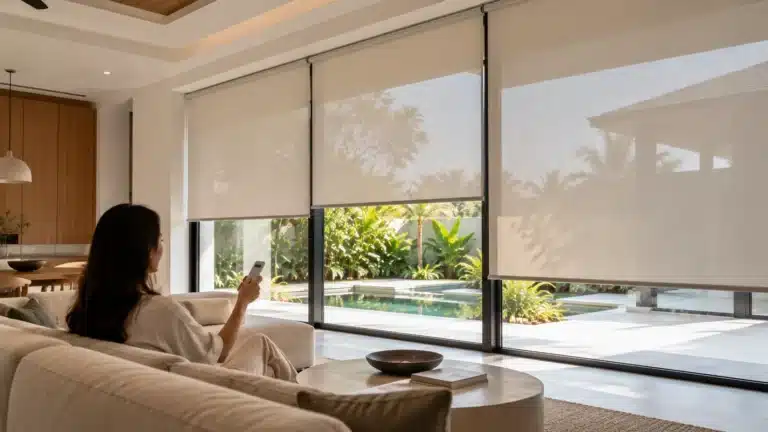
Motorized roman shades operate via remote control, wall switch, or smart home integration. If your Tudor home has tall windows or hard-to-reach installations, motorization adds genuine convenience. Battery-powered motors avoid the need for electrical wiring—an important consideration in older homes where running new wires through plaster walls can be disruptive and expensive.
What Investment Should Westfield Homeowners Expect?
Custom roman shade pricing varies significantly based on window size, fabric selection, lining, and operating mechanism. Rather than quoting a specific figure that may not reflect your particular situation, consider these factors that influence cost:
- Window dimensions: Larger windows require more fabric and more complex mechanisms
- Fabric grade: Designer fabrics can cost several times more than standard options
- Lining selection: Blackout and thermal interlining add to material costs
- Operating mechanism: Motorization increases price compared to cordless or corded options
- Installation complexity: Arched windows and non-standard shapes require more labor
Professional installation ensures precise fit, proper function, and manufacturer warranty coverage—factors that matter more in Tudor homes where windows rarely follow standard dimensions.
The Best Choice for Most Westfield Tudor Homes
After weighing the trade-offs, most Westfield homeowners with Tudor Revival architecture find that hobbled or flat-fold roman shades with thermal lining and cordless operation deliver the best balance of aesthetics, insulation, and usability. Hobbled styles suit formal spaces where traditional elegance matters. Flat-fold works better in areas with ornate trim you want to emphasize. Outside mounting solves most arched-window challenges while improving draft protection—a genuine comfort factor when winter winds sweep across the Golden Triangle NJ area.
For homes in Wychwood and Brightwood with significant heating costs each winter, the thermal performance of lined roman shades can contribute to real energy savings over time. While exact savings depend on your specific windows, HVAC system, and usage patterns, creating an additional air barrier at the window plane reduces heat loss through convection and conduction.
Schedule Your Free Design Consultation
Every Tudor home in Westfield presents unique window challenges. Made in the Shade Golden Triangle NJ, based in Short Hills, serves homeowners throughout the Golden Triangle NJ metro with professional in-home consultations. Your designer brings fabric samples directly to your home so you can evaluate colors and textures against your existing decor, take precise measurements of every window—including those tricky arched openings—and discuss the options that fit your priorities and budget.
Call (908) 633-7909 to schedule your complimentary in-home design consultation with our Westfield roman shade specialists today. Discover how custom window treatments can transform your Tudor home’s comfort and beauty.
Frequently Asked Questions
How long does custom roman shade installation take for Tudor windows in Westfield?
Professional installation typically requires one visit after your shades are fabricated. Fabrication time varies from two to four weeks depending on fabric availability and customization requirements. Arched or irregularly shaped Tudor windows may require slightly longer lead times for template creation. Made in the Shade Golden Triangle NJ coordinates scheduling to minimize disruption to your household.
Can roman shades be installed on leaded glass Tudor windows without damaging the glass?
Yes. Professional installers use mounting techniques that attach hardware to the window frame or surrounding wall rather than the glass itself. Outside mounting is often preferred for leaded glass windows because it avoids any contact with the delicate glazing while providing full coverage and improved draft protection.
Do lined roman shades really help reduce heating costs in older Westfield homes?
Lined roman shades create an additional barrier between your interior and the cold window surface, reducing both radiant heat loss and convective air movement. While specific savings depend on your windows, heating system, and usage habits, homeowners generally notice improved comfort near windows and reduced cold spots in rooms where lined shades replace bare or minimally treated windows.